File: R-1888/60 · Category: person of undetermined allegiance
Kept: 1913–1960 · Status: most records never declassified

RETINGER

The man who built Europe in the shadows

A great Pole you have never heard of. He advised presidents of Mexico and prime ministers of Britain. He rescued Sikorski from burning France. At the age of 56 he parachuted into occupied Poland. He co-created the Council of Europe and invented the Bilderberg Group. Churchill called him “the devil’s cousin”. History calls him nothing at all, because hardly anyone has heard of him.

Open the file
Card 01 · Prologue

Who this man was

Józef Hieronim Retinger (1888–1960) – an orphan from Kraków, a doctor of the Sorbonne, Joseph Conrad’s friend, the éminence grise of Sikorski’s government, the godfather of a united Europe.1

For half a century he was present at the most important tables of the twentieth century, never taking an official seat at any of them. Accused of working for five intelligence services, sentenced to death three times by different enemies – once by his own countrymen – he died in poverty in London, nominated two years earlier for the Nobel Peace Prize. This is his story: told from the archives, marking what we know for certain and what remains a riddle.

Surname and given names
Retinger, Józef Hieronim
Born
17 April 1888, Kraków (Austrian partition)
Died
12 June 1960, London · buried: East Sheen Cemetery
Operational aliases
“Salamander” · “Józef Brzoza” · “Capt. Paisley”
Education
Rome (almost a priest) → Sorbonne (doctorate, reputedly the youngest in the university’s history) → LSE
Official posts in a lifetime
1 – adviser on propaganda to the Polish government (1939)
Death sentences and attempts
3 – Germany, Home Army counter-intelligence, Soviet suspicions
Nomination
Nobel Peace Prize, 19581
Card 02 · The case of the missing memory

Great, and unknown

He co-created today’s architecture of Europe – the Hague Congress, the Council of Europe, the European Movement, the Bilderberg Group. He is absent from textbooks, from monuments and from collective memory. Why?

The reasons are fairly prosaic. Retinger operated only unofficially: no office, no party. Paul-Henri Spaak remembered a man who “knew everybody and no door was closed to him”11 – but the doors he passed through closed silently behind him. Historians follow the trail of offices held and signatures on treaties, and Retinger left his signature on none of the documents he helped bring about.

Then came the Cold War: to communist Poland he was “a British agent” – he was never allowed back to his native Kraków, though he travelled freely to Moscow.1 In the West his greatest creation, Bilderberg, chose discretion and has kept it to this day. Finally: most of the intelligence files on his missions were never declassified, or have vanished.

GAP 01

No office

One official post in a lifetime. Everything else he did informally, at the table.

GAP 02

No monument

A co-creator of Europe’s architecture has no physical commemoration of his role.

GAP 03

No memory in communist Poland

Branded a British agent – erased from post-war historiography at home.

GAP 04

No files

Key intelligence files (FO 371, HS4, KV) – never declassified, or lost.6

“He was the godfather of the European Union. And, one of the great modern Poles.” – M.B.B. Biskupski, the closing sentence of the biography (Routledge, 2017)
Cards 03–11 · Chapters of a biography

Nine lives

Nine folders, each holding a different incarnation of the same man. Some of the facts are firmly confirmed in the archives. The rest remain disputed, concealed, or fabricated by the protagonist himself.

FOLDER I

An Orphan from Kraków

1888–1906

His father – Józef senior, a Kraków lawyer, veteran of the January Uprising, city councillor; it was he who won for Count Zamoyski the famous Morskie Oko border case. His mother – daughter of a rector of the Jagiellonian University. Both died early: Józef junior was left an orphan among five siblings. His upbringing and education were taken over by Count Władysław Zamoyski – his father’s client, one of the richest aristocrats of Galicia.3

The boy was gifted and fervently religious; the family – as he later wrote – “ardent patriots and very ardent Catholics”. Around 1906 he was sent to Rome, to the Academia dei Nobili Ecclesiastici, the forge of Vatican diplomats, under the protection of Cardinal Rampolla. The clerical career lasted a few months: Retinger resigned. That pattern – a quick entrance into an institution and an equally quick exit – would repeat throughout his life.

Scenic moment · a diagnosis for life

Zamoyski, his benefactor, summed up his ward briefly: “too much self-confidence and too much imagination”. To the end of his life Retinger would call him “a saint”.1

FOLDER II

The Salons of Paris and London

1906–1914

The Sorbonne, a doctorate in literature – reputedly the youngest in the university’s history, financed by Zamoyski. His cousin Misia Godebska-Sert – a model for Renoir and Vuillard, later Coco Chanel’s mentor – introduced the twenty-year-old to the salons of Paris: Ravel, Satie, Giraudoux, Mauriac. André Gide told him to his face: “Joseph, you will never be a writer”.

In London, through Arnold Bennett, he met Joseph Conrad in 1909 – the beginning of one of the most important friendships of his life. Conrad admired his “almost unlimited political and diplomatic talent”; in the summer of 1914 Retinger arranged Conrad’s first journey to Poland in twenty years. War broke out – the two barely escaped the continent.1 In 1911 he founded the one-man “Polish Bureau” in London – the office of a state that did not exist.

Scenic moment · Gide’s prophecy

“Joseph, you will never be a writer.” Gide was only partly right: Retinger went on to publish several books, on Conrad and on Mexico. None of them left a mark on readers.

FOLDER III

An Agent of Many Services

1914–1918

In the Great War Retinger became a self-appointed ambassador of the Polish cause in London and Paris. His 1914 mission to the USA he summed up himself: “the greatest debacle for me… entirely through my own fault. I was too cocky. I did everything wrong.” It was then that the pattern emerged which would follow him to the grave: nobody knows whose agent he really is. The Germans called him an English spy; Harold Nicolson of the Foreign Office noted: “I am inclined to regard Dr. Retinger as an international spy.”6

The peak of the period was the Sixte affair (1916–1917): prompted by the marquis Boni de Castellane, Retinger tried to broker a separate peace between the Entente and Austria-Hungary, using his contacts with Sixte de Bourbon-Parma, brother of Empress Zita, and the Jesuit general Włodzimierz Ledóchowski. The plan collapsed. In 1918 Retinger was expelled from France – nervous breakdown, the end of his marriage, a suicide attempt. He fled through Spain and Cuba to Mexico.1

Scenic moment · Biskupski’s thesis

After years of research his biographer reaches a startling conclusion: “the ultimate source of the accusation that Retinger was a British agent was Retinger himself” – he fed the rumours to build his own legend and open doors.1

FOLDER IV

Mexico: Revolution and Oil

1918–1936

In revolutionary Mexico the European salon habitué became adviser to the union boss Luis Morones (compared to “a Chicago gangster of the Prohibition era”) and to successive presidents – Obregón and Calles. He advised on oil policy; years later he would admit: “I had partial responsibility for nationalization, but only for the idea.” He was entangled in the affair of five thousand documents stolen from the US embassy and a plan to use them against Washington.1

In 1925 he was arrested on a train in St. Louis – as he put it, “for not being Józef Retinger” – and spent some four months in jail. The conditions were recorded by his partner of those years, the writer Katherine Anne Porter: “Very hot… full of cockroaches, and the food abominable.” It was in Mexico that Retinger formulated the thought on which he would build the rest of his life: the world’s great problems are solved by an informal network of influential people – “a sort of mafia and open conspiracy of people in various countries”.

Scenic moment · the prototype

Biskupski would sum up that “mafia” in one sentence: it would reappear “a generation later as the Bilderbergers”. Nearly thirty years would pass between that thought and the first conference at Oosterbeek.

FOLDER V

The Morges Front

1930–1939

Back in Europe in the 1930s – years marked by the death of his second wife, Stella Morel – Retinger entered Polish politics through the side door, as usual. He became the liaison between the anti-Sanacja opposition of the Morges Front – Sikorski, Paderewski, Witos, Korfanty, Haller – and the British Labour Party, trying to persuade London to make loans to Poland conditional on democratisation.9

It was then – through the trade-union movement and Edo Fimmen – that the key relationship of his life took shape: the friendship with General Władysław Sikorski, a politician then shunted onto a side track. Three years later Sikorski would be prime minister and commander-in-chief.

Scenic moment · a bet on a man

In the 1930s backing a sidelined general looked like a political mistake. In September 1939 it turned out that no one stood closer to the new prime minister than Retinger.

FOLDER VI

Sikorski’s Éminence Grise

1939–1943

On 30 September 1939 Sikorski became prime minister of the government-in-exile. Retinger received the only official post of his career – adviser on propaganda – and unofficially became the premier’s chief political adviser and interpreter, present at nearly every conversation with Churchill, Roosevelt, Eden, Stalin. The British investigated him; minister Dalton called him “a sewer rat”, yet conceded he had Sikorski’s full trust and “must be reckoned with”. In the Foreign Office a Churchill bon mot made the rounds – “le cousin du diable”, the devil’s cousin – together with a piece of practical advice: “It is no good trying to circumvent Retinger.”6

In June 1940, as France collapsed, Retinger reached the fleeing premier in Bordeaux. Asked why he had come, he replied: “To have lunch with you” – and took Sikorski to England. In August 1941, after the Sikorski–Maisky pact, he went to Moscow as chargé d’affaires to negotiate the fate of the deported Poles; his enthusiastic reports on Soviet treatment of Poles Biskupski calls plainly “nonsense” – “probably because that is what London wanted him to say”. In parallel, Retinger was the architect of the plans for a Polish–Czechoslovak confederation – torpedoed by Beneš and Moscow.1

On 4 July 1943 Sikorski’s plane crashed off Gibraltar. Retinger was to have flown on it – there was no seat left. Summoned by Churchill at midnight, he found the British prime minister in tears. “All our schemes came to nothing,” he noted.

Scenic moment · Bordeaux, 17–18 June 1940

France is collapsing, the roads are choked with refugees, the Polish government is in disarray. A civilian with no office finds the premier and says: “To have lunch with you.” The next day the two were already on their way to England.

FOLDER VII

Salamander: the Jump into Poland

1944

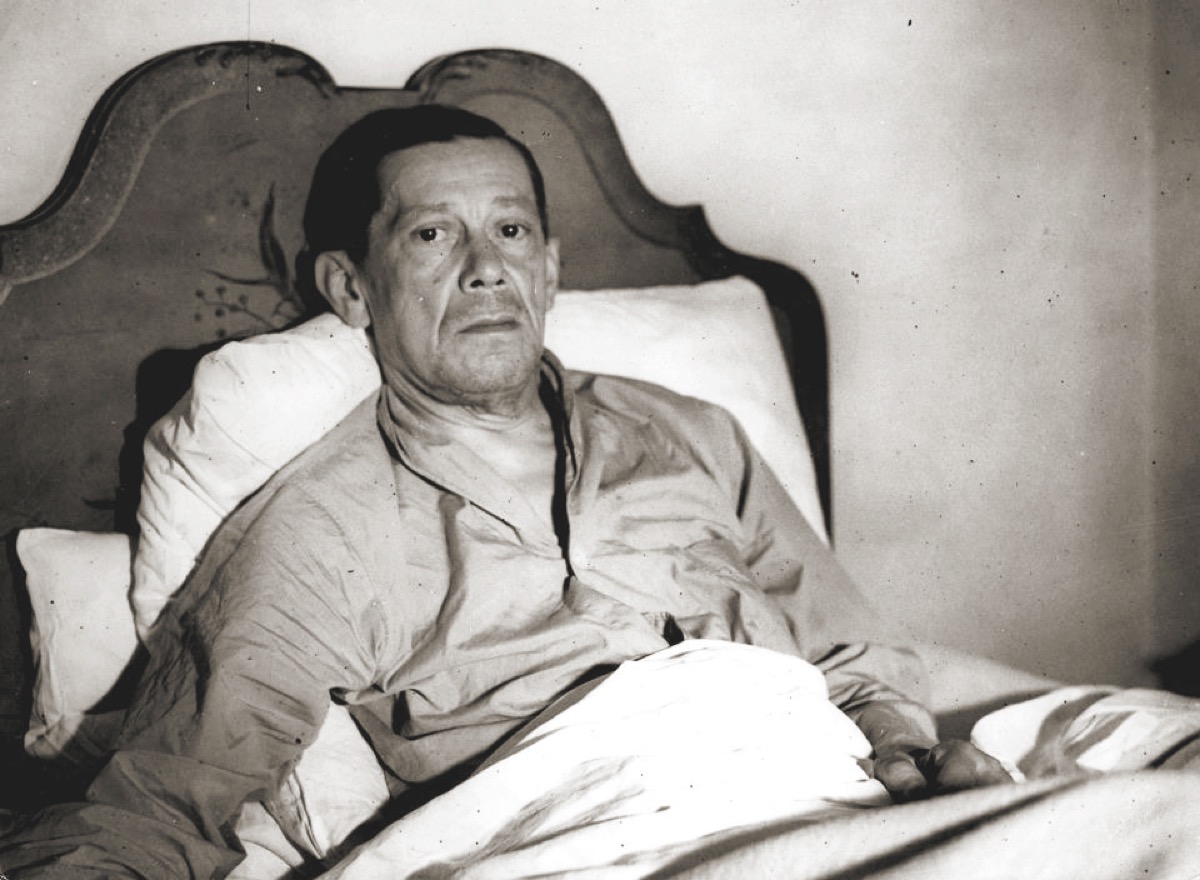
The most cinematic and also the darkest episode of this biography. In April 1944 the 56-year-old Retinger, with no parachute training and in poor health, jumped by night into occupied Poland. The mission was formally ordered by premier Mikołajczyk; in practice it was mounted by the British SOE – probably at Retinger’s own initiative. Its purpose is disputed to this day.12

More dangerous than the Gestapo proved his own underground: Home Army counter-intelligence classified him as “an English agent and international racketeer” and planned his liquidation. The sequence below – step by step, from eyewitness accounts and historians’ findings.5

Operational reconstruction · April–July 1944

Operation “Salamander”

The oldest combat parachutist of the war. Three months in a country where the Germans and his own side alike want him dead.

NIGHT
3/4 IV 1944

The jump

He boards the aircraft in a mask – no one in the crew may recognise him. Fifty-six years old, no training, Operation “Wildhorn”. He parachutes into occupied Poland as “Salamander”.

DAY 3

The Gestapo knows

In Warsaw he meets the leadership of the Underground: Jankowski, Korboński, Gen. Bór-Komorowski. He behaves recklessly – drinks, frequents well-known places. By the third day the Gestapo is looking for him.

V 1944

Sentenced by his own

Home Army counter-intelligence classifies him as an agent sent to “defuse the patriotic Underground”. A liquidation order follows. “Various people in London… insist that I be liquidated in Poland… And they want to murder me!” – Retinger’s own note.

29/30 V 1944

First evacuation: failure

The air operation falls through. Retinger runs through the dark after the departing plane and falls into water.

VI–VII 1944

Poison

Partially paralysed, he hides in Warsaw and Kraków. The official version: “an inflammation of the nerves”. The findings of historian Władysław Bułhak (IPN): the paralysis was caused by administered poison, and the illness was the cover story.5

25/26 VII 1944

Most 3 / Wildhorn III

Evacuation from a waterlogged field near Tarnów. The Dakota bogs down in mud – take-off succeeds on the fourth attempt, after more than an hour. Days later the Warsaw Rising breaks out.

Register of assassination attempts – the 1944 mission
MethodCourseOutcome
SHOTA gunman at close range; a woman accompanying Retinger shields him.Failed
POISONAdministered in food; the dose too small to kill.Partial paralysis, covered up as “an inflammation of the nerves”
FOLDER VIII

Builder of Europe

1946–1952

After the war Retinger redirected all his energy and his whole network towards one idea: a united Europe as insurance against another war. He founded the European League for Economic Cooperation (1946), built the Liaison Committee joining the rival federalist movements (1947), and finally organised the Congress of Europe in The Hague (7–10 May 1948): 740 delegates, Churchill as speaker, Retinger as spiritus movens.8

“Everything began at The Hague,” Denis de Rougemont would say, calling Retinger “the spiritual father but also the obstetrician of the Council of Europe”. Out of the Congress grew the Council of Europe (Treaty of London, 1949) and, indirectly, the whole process of integration down to today’s EU. The darker side: the movement was largely financed by American foundations and the CIA (via the American Committee on United Europe) – by 1958, 53.5% of the European Movement’s budget.10

Scenic moment · Ridderzaal, May 1948

In the medieval Hall of Knights in The Hague sit 740 delegates, Churchill at the rostrum. The man who convened it all does not take the floor. The minutes barely record his presence.

FOLDER IX

Bilderberg and the Shadow

1952–1960

In 1952 Retinger left the European Movement and began to assemble something new: confidential meetings of leading politicians, businessmen and intellectuals from both sides of the Atlantic, meant to defuse the growing transatlantic mistrust. As titular chairman he chose Prince Bernhard of the Netherlands; the engine of it all remained himself. Ambassador Quaroni recalled: “Ideas poured forth from Retinger like a burst from a machine gun… The old intriguer had such an appealing manner, that we agreed with everything that he wanted.”

The first conference: May 1954, the Hotel De Bilderberg in Oosterbeek – hence the name. Retinger remained secretary general until his death; from the start the group chose complete discretion (no office, no speakers’ names, no quotation) – fuel for conspiracy theories for decades to come.14

In 1958 he was nominated for the Nobel Peace Prize. Two years later he died of lung cancer – in utter poverty, in a small flat above the Harrods department store. Generals Anders and Kukiel attended the funeral at East Sheen Cemetery. His library he bequeathed to the Jagiellonian University.1

Scenic moment · the epitaph

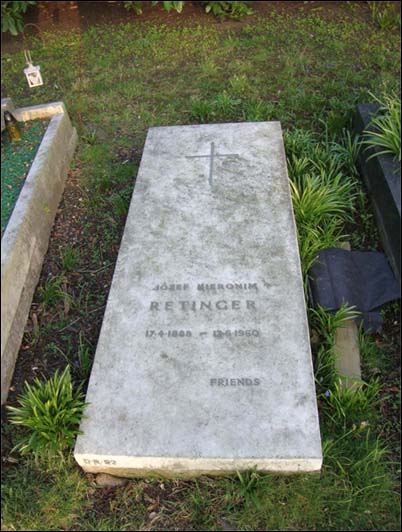
The slab at East Sheen bears no titles and no achievements. One word is carved beneath the dates: “FRIENDS”. It was they who paid for the funeral of a man who had moved millions.

Card 12 · Chronology

Timeline 1888–1960

Seventy-two years, three continents, two world wars. Entries from his life run alongside the events of the wider world.

● key events  ·  WORLD – parallel track of world events

  1. 1888
    17 April: born in Kraków, in the Austrian partition. Orphaned early, among five siblings.
  2. ~1906
    Rome: preparation for the priesthood (Academia dei Nobili Ecclesiastici) – a swift resignation.
  3. 1906–11
    Paris, the Sorbonne – doctorate in literature (reputedly the youngest in the university’s history); financed by Count Władysław Zamoyski.
  4. 1909
    Meets Joseph Conrad – the beginning of one of the great friendships of his life.
  5. 1910–11
    London, LSE; founds the one-man “Polish Bureau” – an office for the Polish cause.
  6. 1912
    Marries Otolia Zubrzycka.
  7. 1914
    Arranges Conrad’s return visit to Poland – just before the outbreak of war; both barely escape the continent.28 July – outbreak of the First World War
  8. 1914–18
    Unofficial ambassador of the Polish cause in London and Paris; failed mission to the USA (“the greatest debacle for me”).
  9. 1916–17
    The Sixte affair: secret attempts at a separate peace between the Entente and Austria-Hungary (contacts: Sixte de Bourbon-Parma, the Jesuit general Ledóchowski).
  10. 1918
    Expelled from France; nervous breakdown, the end of his marriage, a suicide attempt. Flight through Spain and Cuba to Mexico.11 November – end of the war; Poland regains independence
  11. 1919–28
    Mexico: adviser to Luis Morones and presidents Obregón and Calles; oil policy and the idea of nationalisation.
  12. 1925
    Arrested in St. Louis (“for not being Józef Retinger”) – about 4 months in jail.
  13. 1920s
    Meets Gen. Władysław Sikorski (through the trade-union movement, Edo Fimmen).
  14. 1931/33
    Death of his second wife, Stella Morel.
  15. 1936
    The Morges Front: liaison between the opposition (Sikorski, Witos, Paderewski, Korfanty, Haller) and the British Labour Party.
  16. 1939
    September: Sikorski becomes premier of the government-in-exile; Retinger his adviser on propaganda – the only official post of his life.1 September – outbreak of the Second World War
  17. 1940
    17–18 June: the daring rescue of Sikorski from Bordeaux – “To have lunch with you”.The fall of France
  18. 1941
    The Sikorski–Maisky pact; August: mission to Moscow as chargé d’affaires; talks on freeing the deported Poles.Germany attacks the USSR
  19. 1940–43
    Architect of the plans for a Polish–Czechoslovak confederation – torpedoed by Beneš and Moscow.
  20. 1943
    4 July: the Gibraltar crash – Sikorski’s death. Retinger was to be aboard; there was no seat.
  21. 1944
    April: parachute jump into occupied Poland (Operation “Salamander”), aged 56, untrained. Home Army counter-intelligence plans his liquidation: a shooting attempt, then poison.
  22. 1944
    25/26 July: evacuation from a waterlogged field (Operation “Most 3 / Wildhorn III”) – take-off on the fourth attempt.1 August – outbreak of the Warsaw Rising
  23. 1946
    Founds the European League for Economic Cooperation.Churchill’s Fulton and Zurich speeches
  24. 1947
    The Liaison Committee – joining the rival federalist movements.The Marshall Plan
  25. 1948
    7–10 May: the Congress of Europe in The Hague – 740 delegates, Churchill as speaker, Retinger the “spiritus movens”.
  26. 1949
    The Treaty of London – the Council of Europe is born.NATO is founded
  27. 1952
    Leaves the European Movement; begins assembling confidential meetings of elites from both sides of the Atlantic.The ECSC – the Coal and Steel Community – starts work
  28. 1954
    May: the first conference at the Hotel De Bilderberg (Oosterbeek, Netherlands) – the birth of the Bilderberg Group; Retinger secretary general.
  29. 1954–59
    Further conferences: France, Germany, Denmark, USA, Italy, Great Britain, Turkey.1957 – the Treaties of Rome: the EEC is born
  30. 1958
    Nomination for the Nobel Peace Prize.
  31. 1960
    12 June: dies in London (lung cancer), in poverty; funeral at East Sheen Cemetery attended by generals Anders and Kukiel; his library bequeathed to the Jagiellonian University.
Card 13 · The route

Map of a life

Eleven stations, three continents. The line draws itself in travel order – from Kraków to London, where it all ended.

Kraków1888 · born Rome~1906 Paris1906–11 London1911–18 · 1930–60 · †1960 Mexico1919–28 St. Louis1925 · jail Moscow1941 Warsaw1944 · “Salamander” Gibraltar1943 · the crash The Hague1948 · Congress of Europe Oosterbeek1954 · Bilderberg

A schematic route of a life (indicative, not cartographic). ● – key stations.

Card 14 · Connections

Network of contacts

“He knew everybody and no door was closed to him.” Pick a person to see what tied them to Retinger.

JÓZEFRETINGER
NetworkHover, tap or tab to a person to read the nature of the relation.
Card 15 · A register of knowledge and ignorance

Clear / Unclear

An honest register: on the left, facts confirmed in the sources; on the right, riddles and disputes. Every entry expandable, with a footnote.

Clear

Confirmed in archives and scholarship

Chief organiser of the Congress of Europe in The Hague (1948), co-creator of the Council of Europe (1949)

Documents of the European Movement, participants’ accounts; de Rougemont called him “the spiritual father but also the obstetrician of the Council of Europe”.8

Initiator, organiser and first secretary general of the Bilderberg Group (1954–1960)

The group’s archives and Retinger’s own 1956 report “The Bilderberg Group”, publicly available.14

Gen. Sikorski’s closest political adviser, 1939–1943

Present at the talks with Churchill, Roosevelt, Eden, Stalin – confirmed in Foreign Office papers and eyewitness accounts.6

The mission to occupied Poland and a parachute jump at 56 (1944)

Eyewitness accounts (T. Chciuk-Celt), SOE documents.12

The attempt on his life by Home Army counter-intelligence: poisoning, with the paralysis as cover

The findings of historian Władysław Bułhak (IPN, “Pamięć i Sprawiedliwość”).5

The financing of the European Movement by American foundations and the CIA (via ACUE)

By 1958 – 53.5% of the budget; research by Hugh Wilford and others.10

The Moscow mission as Polish chargé d’affaires (1941)

After the Sikorski–Maisky pact; negotiations over the deported Poles – documents of the government-in-exile.1

Adviser to Mexican presidents; jail in the USA (1925)

A role in the oil disputes, some 4 months in a St. Louis jail – accounts including Katherine Anne Porter’s.1

The friendship with Joseph Conrad

Author of “Conrad and His Contemporaries” (1941/1943); arranged Conrad’s journey to Poland in 1914.15

Nobel Peace Prize nomination (1958); death in poverty in London (1960)

The Nobel Committee’s nomination register; accounts of his last years – Pomian.11

Unclear

Riddles, disputes and gaps in the files

Whose agent was he?

For 50 years accused of working for British, French, Austrian, German and Soviet intelligence. Biskupski’s thesis: the main source of the rumour was… Retinger himself, building his own legend.1

Who really ordered the 1944 mission?

Formally premier Mikołajczyk; in practice it was mounted by the British SOE – probably at Retinger’s own initiative. The mission’s purpose is disputed to this day.12

The family’s origins

Podgórski found documents recording the conversion of a great-grandfather from Judaism (1827); Retinger denied it, his grandson calls it “an anti-Semitic fabrication”. Biskupski: the evidence on the father’s side is strong, the mother unconnected, the upbringing strictly Catholic.3

Freemasonry

Repeatedly accused, he consistently denied it; no document confirming membership exists.

Money

He organised financing on a European scale worth millions, lived himself off friends’ gifts and died penniless – how he kept afloat has never been reconstructed.

What he knew about the CIA money

How much he knew, and from when – the accounts conflict; according to Wilford, near the end of his life he admitted that he knew.10

The Moscow reports of 1941

Why did he send enthusiastic, untrue reports on the fate of Poles in the USSR – naivety, diplomacy, or pressure from London?1

Gibraltar

Why was he not aboard Sikorski’s plane on 4 July 1943 – chance, or something more? There is no evidence whatever for the second thesis – we note it and cut the speculation short.

The intelligence files

Most of the files on his missions were never declassified, or have vanished (FO 371, HS4, KV – The National Archives, Kew).6

Card 16 · Testimony

What they said about him

“Le cousin du diable” – the devil’s cousin. But: “It is no good trying to circumvent Retinger.”

– Winston Churchill / the British Foreign Office

“Joseph, you will never be a writer.”

– André Gide to the 19-year-old Retinger

“Retinger’s activities go on at white heat – personal success immense, political what it can be.”

– Joseph Conrad, letter, 1916

“I am inclined to regard Dr. Retinger as an international spy.”

– Harold Nicolson, Foreign Office, 1918

“The greatest debacle for me… entirely through my own fault. I was too cocky. I did everything wrong.”

– Retinger on his 1914 mission to the USA

“Very hot… full of cockroaches, and the food abominable.”

– Katherine Anne Porter on Retinger’s American jail, 1925

“I admit that I had partial responsibility for nationalization, but only for the idea.”

– Józef Retinger on Mexico’s oil

“To have lunch with you.”

– Retinger to Sikorski in Bordeaux, June 1940 – asked why he had flown into collapsing France

“A Russian ambassador did really not need to leave – when we win the war we shall just take Warsaw.”

– Andrei Vyshinsky to Retinger, Moscow 1941

“All our schemes came to nothing.”

– Retinger after Sikorski’s death, 1943

“Various people in London… insist that I be liquidated in Poland… And they want to murder me!”

– Retinger on the attempt on his own life, 1944

“An intelligent, active, and slightly mysterious individual… He knew everybody and no door was closed to him.”

– Paul-Henri Spaak

“Everything began at The Hague” – and Retinger was “the spiritual father but also the obstetrician of the Council of Europe”.

– Denis de Rougemont

“Ideas poured forth from Retinger like a burst from a machine gun… The old intriguer had such an appealing manner, that we agreed with everything that he wanted.”

– Ambassador Pierre Quaroni on the birth of Bilderberg

“He came straight out of the Renaissance… a deeply religious, passionate, daring character with the Jesuitical conviction that the end justified the means… But the ends he sought were never selfish. They were good.”

– Alden Hatch

Asked what he would choose to be if he could choose, he answered at once: “a Pole”.

– an account repeated by his biographers
Card 17 · Photographic record

The man who avoided the camera

Few photographs of Retinger survive – and in almost none of them does he stand at the centre of the frame. Look for him where he always stood: in the second row, behind someone’s shoulder.

Józef Retinger lying in bed, emaciated, looking into the camera
Józef Retinger after his return from the “Salamander” mission, 1944. The partial paralysis caused by poison was covered up as “an inflammation of the nerves”. The only frame in this set in which he is alone Archival photograph; rights to be confirmed before publication
A group of soldiers marching in ranks, among them a man in civilian clothes
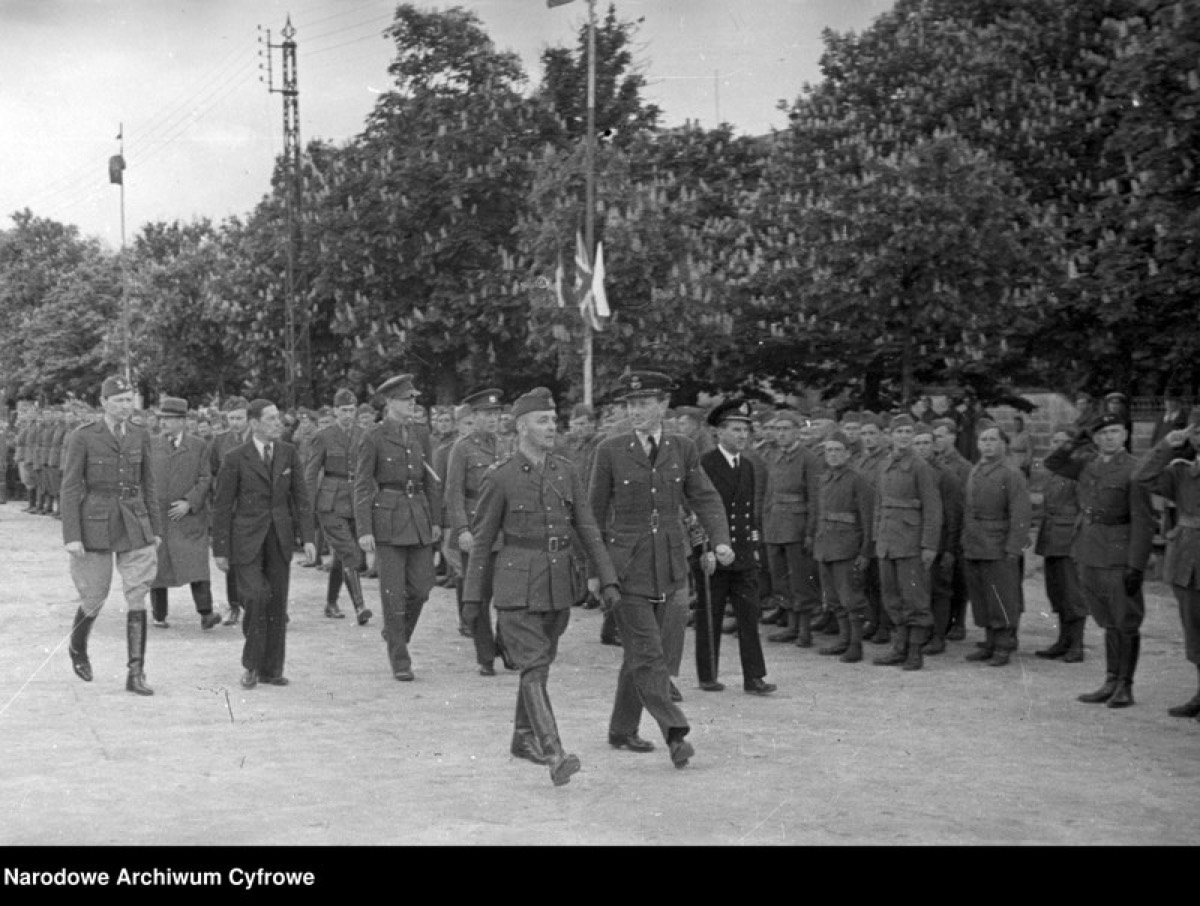
France, 1940. The archival caption says everything about our protagonist’s method: “In the second row, in civilian clothes, walks Józef Retinger”. Retinger: second row, in civilian clothes Photo: Czesław Datka, NAC, ref. 18-263-4 · source record
A man in a civilian suit in the foreground, Polish and British officers behind him in front of a hangar
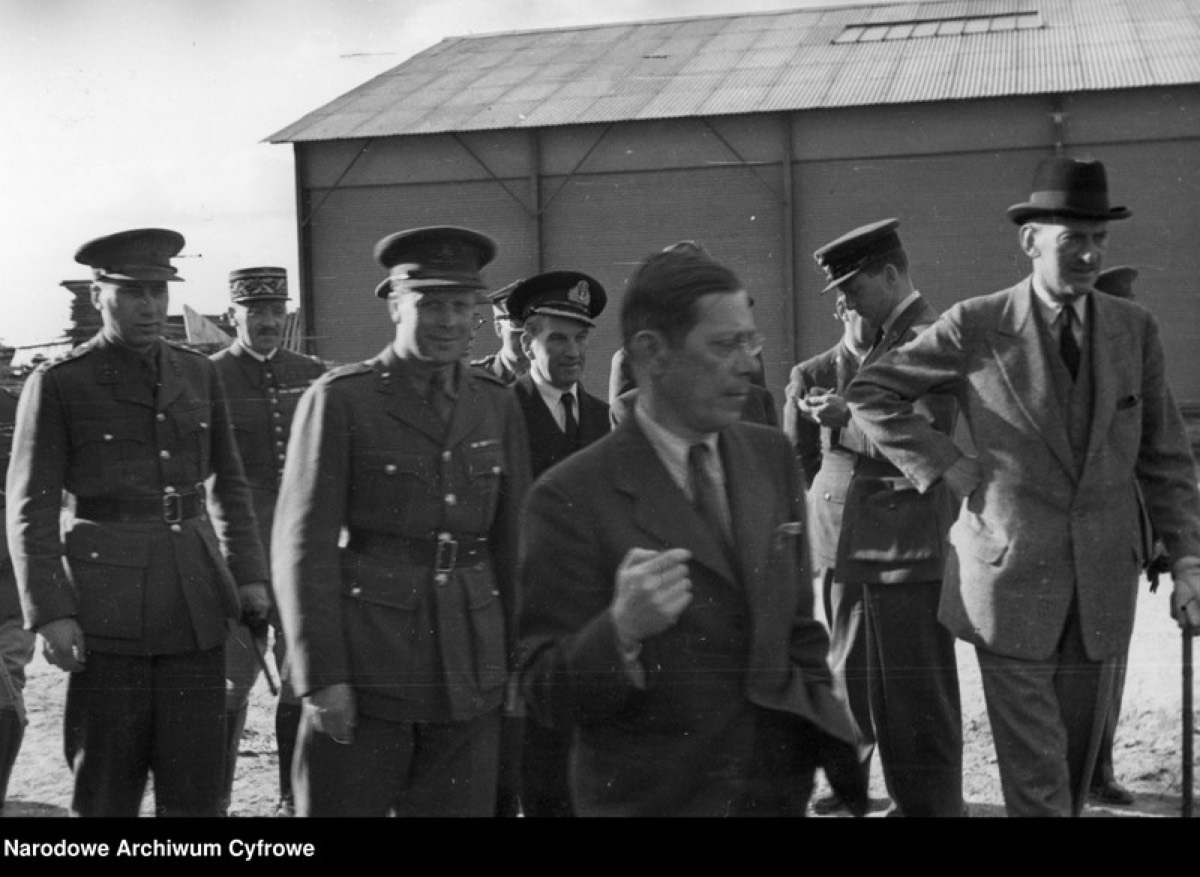
The Polish Army camp at Coetquidan, 1940. A British military mission – in the foreground, for once, Józef Retinger. Retinger: foreground, in a suit Photo: Czesław Datka, NAC, ref. 18-244-17 · source record
A group of officers and civilians at the entrance to a wooden barrack
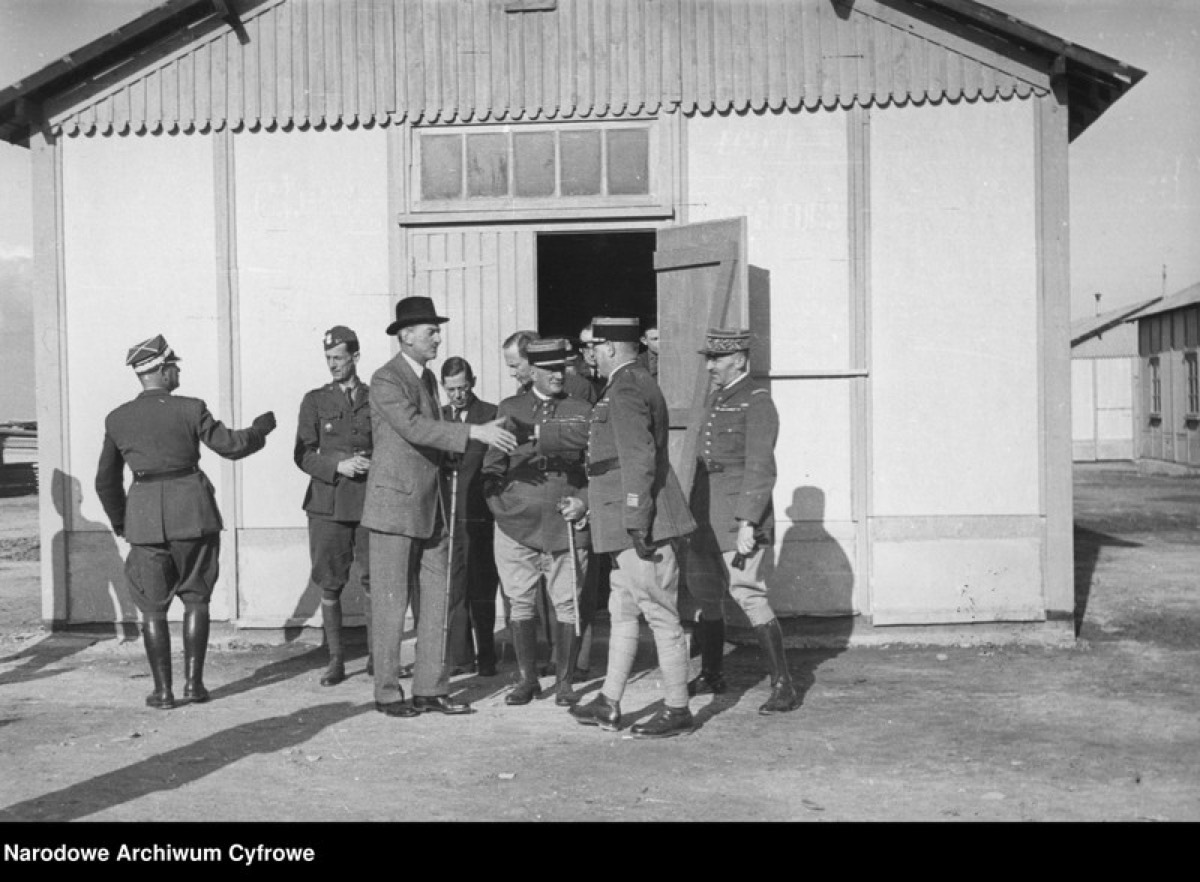
Coetquidan, 1940. Guests at the entrance to a barrack; among the generals and colonels – a civilian. Retinger: fourth from the left Photo: Czesław Datka, NAC, ref. 18-244-13 · source record
Civilian guests and an officer in conversation at a military camp
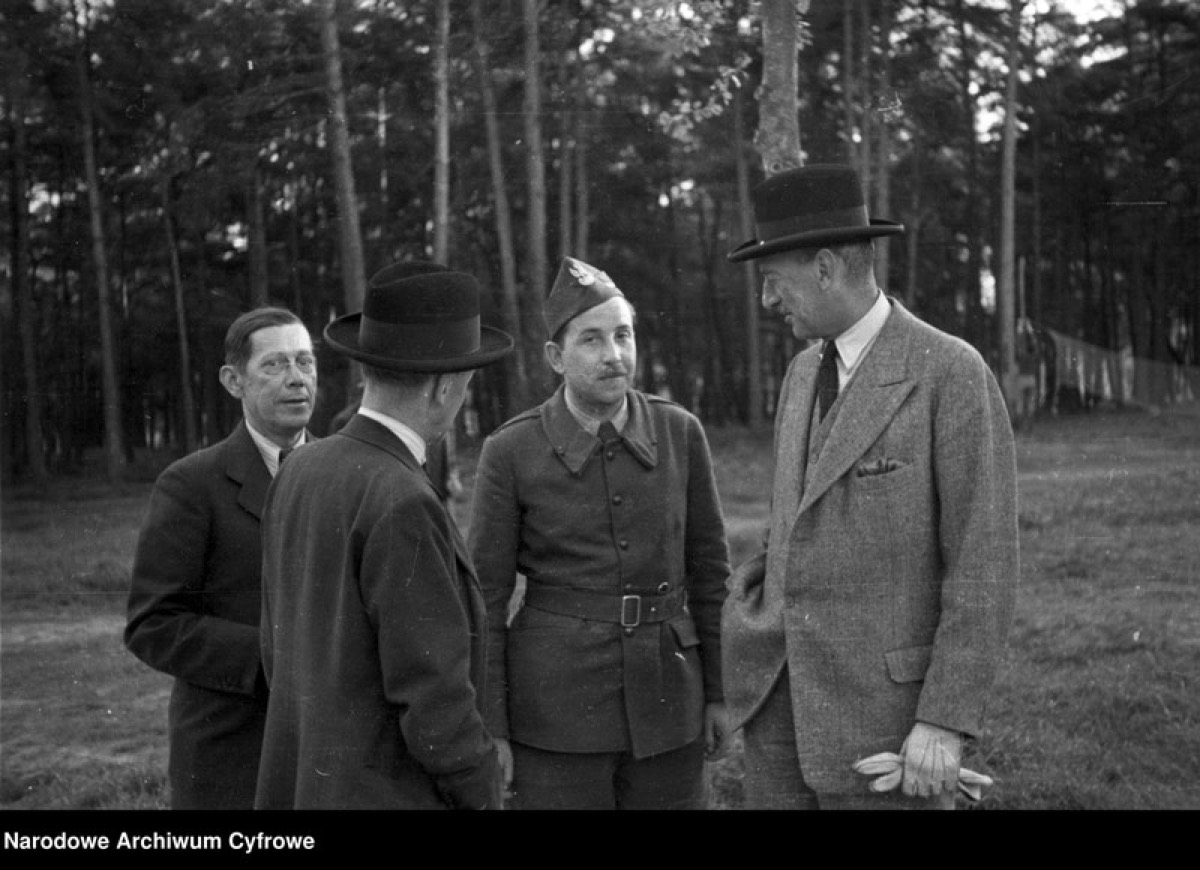
Coetquidan, 1940. Civilian guests and Lt. Zbigniew Korfanty during the visit of the British military mission. Retinger: on the left Photo: Czesław Datka, NAC, ref. 18-244-25 · source record
Officers and a civilian on a platform watching the quayside
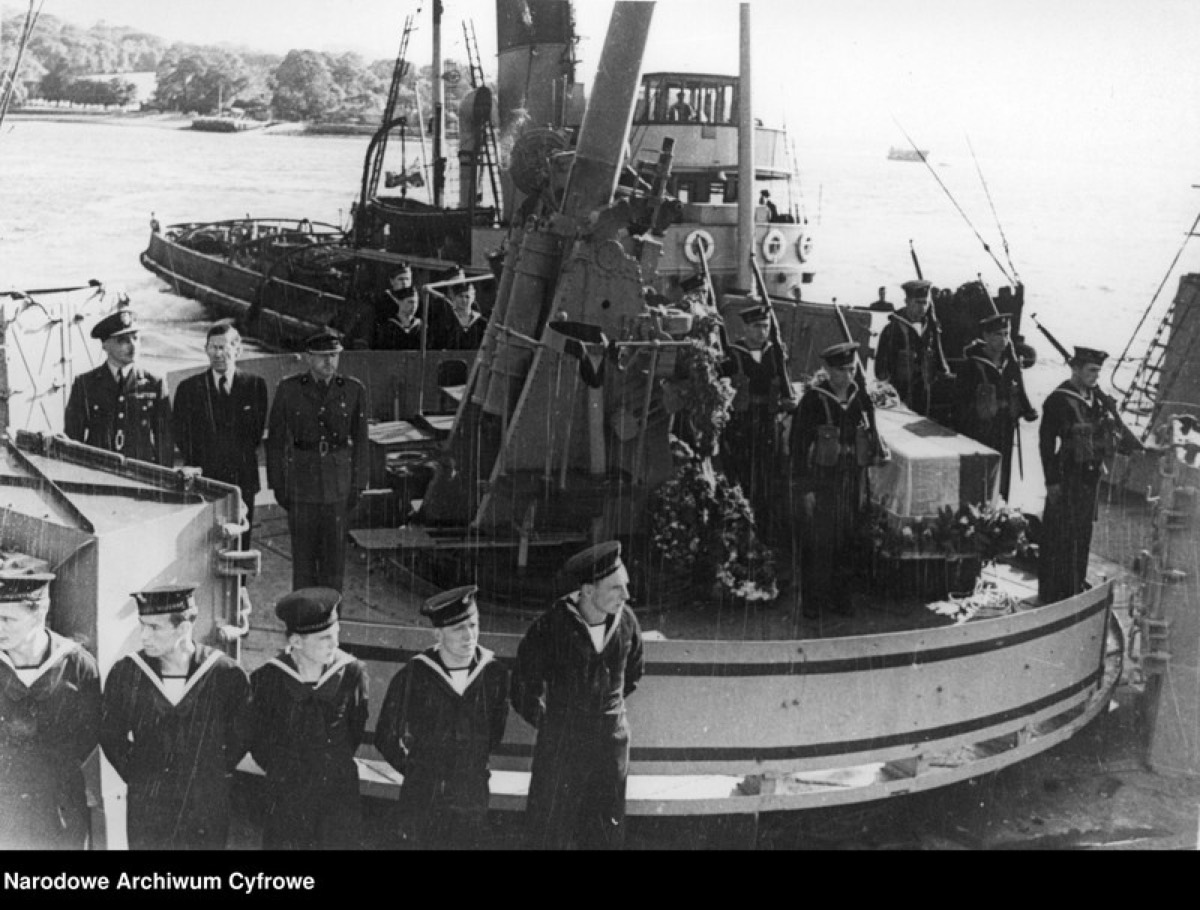
The arrival of ORP “Orkan” with Gen. Sikorski’s coffin, 10 July 1943. On the platform Gen. Stanisław Ujejski and Józef Retinger – in the archival caption: “personal secretary to General Sikorski”. Retinger: on the platform, right Photo: Czesław Datka, NAC, ref. 18-98-9 · source record
A funeral cortège with a coffin on a gun carriage, soldiers and one civilian walking behind
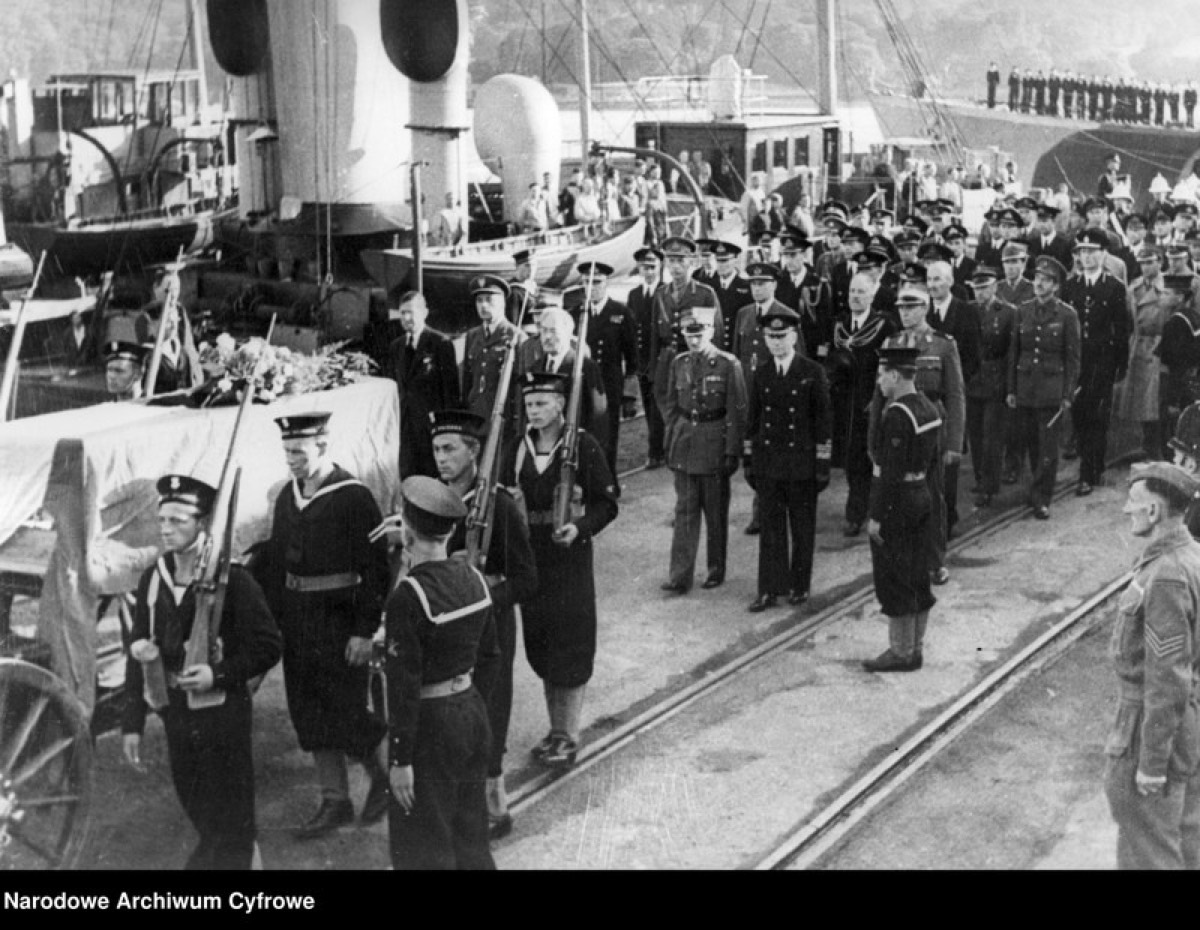
The cortège with Gen. Sikorski’s coffin on its way from the port to the railway station, July 1943. In the first row behind the coffin, beside the generals – Retinger. Retinger: first on the left behind the coffin Photo: Czesław Datka, NAC, ref. 18-98-19 · source record
State and military dignitaries waiting outside a building for the coffin to be carried out
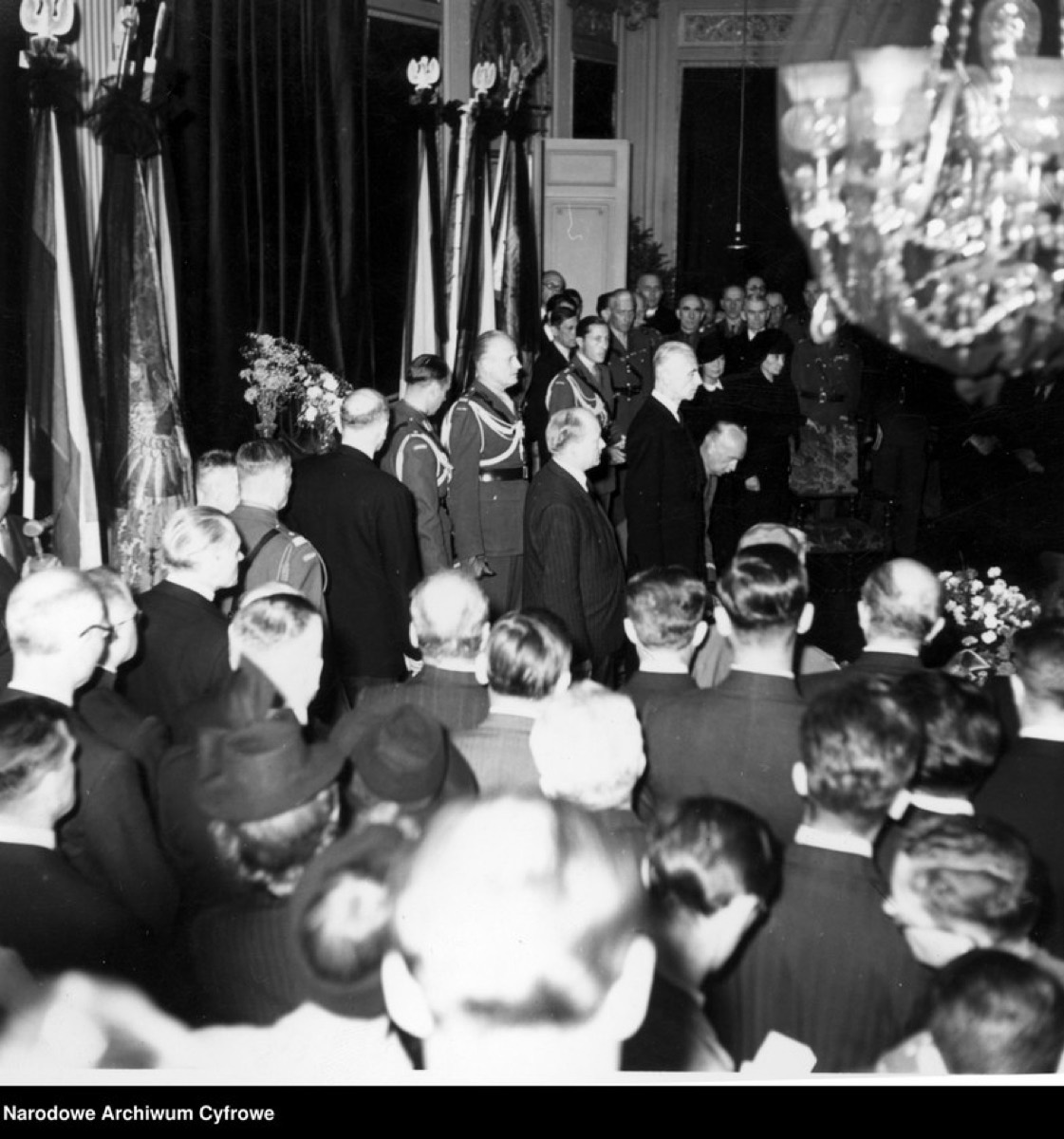
London, July 1943. Waiting for the coffin: premier Mikołajczyk, president Raczkiewicz, Gen. Sosnkowski, Helena Sikorska – and Retinger, blended into the second row. Retinger: in the background, among the dignitaries Photo: Czesław Datka, NAC, ref. 18-99-64 · source record
Mourners casting earth into the grave
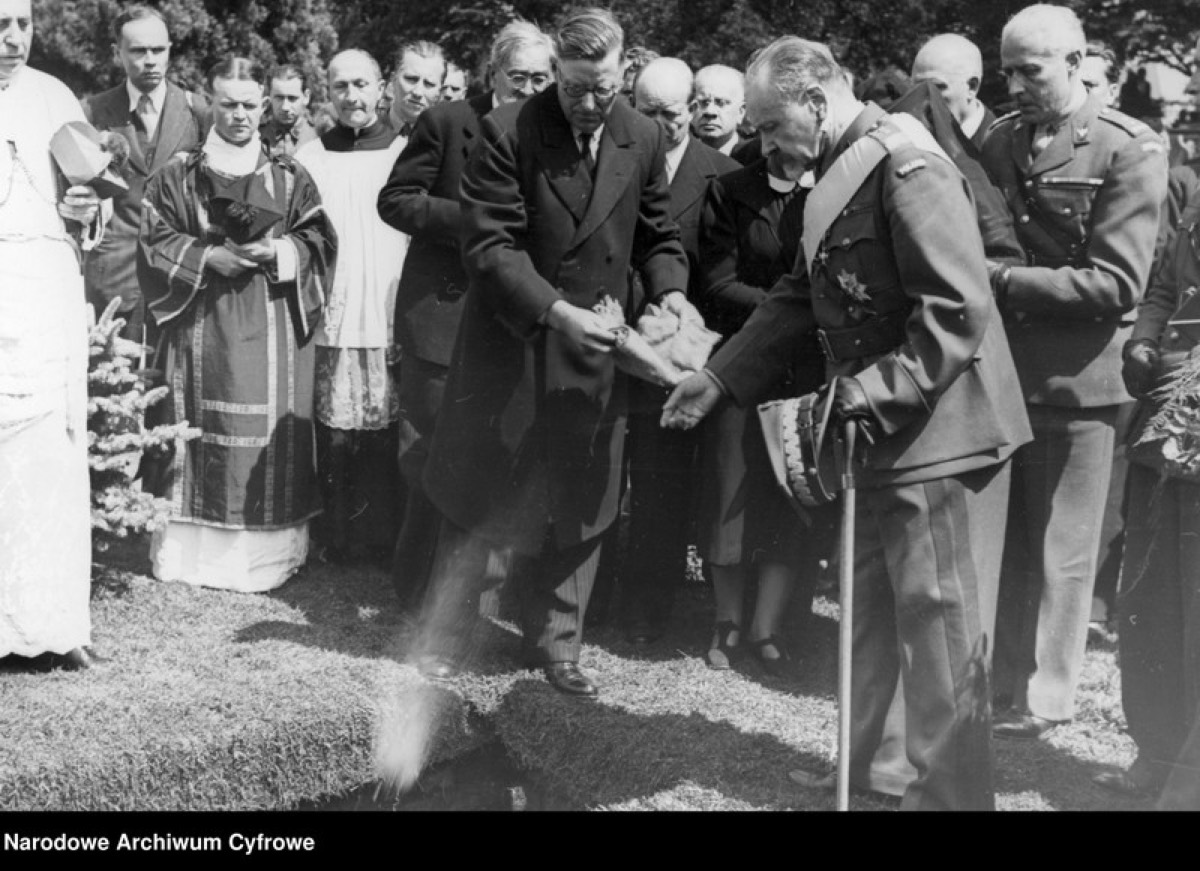
Gen. Sikorski’s funeral, Newark, 16 July 1943. Casting earth: Bishop Gawlina, Mikołajczyk, Gen. Haller, Gen. Sosnkowski – among them, Retinger. Retinger: among the mourners Photo: Czesław Datka, NAC, ref. 18-100-82 · source record
A plain stone grave slab with a cross, the name Retinger, and the word Friends
The grave at East Sheen Cemetery, London. Beneath the dates, a single word: “FRIENDS” – the stone was paid for by his friends. The only monument he has Photo via Wikimedia Commons; rights to be confirmed before publication
Image rights

NAC photographs are published with caption and reference number, in line with the archive’s rules (rights belong to the archive; every object links to its source record at szukajwarchiwach.gov.pl). The final version of the site will extend the gallery with PISM material (the Retinger Collection), IWM holdings and documents – including the report “The Bilderberg Group” (1956).

Card 18 · What remains

Legacy

Council of Europe → European Union

Out of the Hague Congress (1948) grew the Council of Europe (1949) and, indirectly, the whole process of integration – through the Treaties of Rome (1957) to today’s EU.

The Bilderberg Group

Still meets every year, still discreetly. Its first secretary general – and its inventor – remains, in the files, a man from Kraków.

A library for the Jagiellonian

He bequeathed his book collection to the Jagiellonian University – in the city to which communist Poland never let him return.

Grandsons

Among his grandsons: Jasper Fforde, the acclaimed British novelist, and David French, Sapkowski’s English translator. The literary talent Gide denied the grandfather returned in the third generation.

Retinger’s grave slab with the word FRIENDS
He has no monument, no street, no hall bearing his name. He has a slab in a London cemetery, paid for by his friends, with a single word: FRIENDS. East Sheen Cemetery, London · a plot with a view of nothing in particular
Card 19 · Verification

Myths and theories

A whole library of conspiracy literature has grown up around Bilderberg and Retinger. We take it apart honestly: what is grounded in documents, and what is fantasy.

Confirmed

“The European Movement was financed by the CIA”

Yes – via the American Committee on United Europe (ACUE) and American foundations; by 1958, 53.5% of the budget. This is a scholarly finding (Wilford and others), not a conspiracy theory. The only open question is how much Retinger knew, and from when.10

Confirmed

“His own counter-intelligence tried to kill him”

Yes – two attempts in 1944 (a shooting, poison); the post-poisoning paralysis was covered up as illness. The findings of W. Bułhak (IPN).5

Partly – disputed

“He was a foreign intelligence agent”

Accused of working for five services; most files never declassified. Biskupski’s thesis: the rumour of his own agent status was spread chiefly by himself. Conclusive proof – either way – does not exist.1

Partly – disputed

“He came from a family of Jewish converts”

Documents found by Podgórski point to a great-grandfather’s conversion (1827); the family denied it. Biskupski: the evidence on the father’s side is strong, the upbringing strictly Catholic. Note: the theme has been used in anti-Semitic registers – on this site it is strictly a genealogical fact to be verified.3

No evidence

“He was a Freemason”

Repeatedly accused, he consistently denied it. No document confirming membership exists. The literature that claims otherwise cites no sources.

Fantasy

“Bilderberg is a secret world government”

The group is a discreet discussion forum of elites – which deserves critical analysis in itself – but the “world government” thesis has no support in any known document, including Retinger’s own 1956 report.14

Speculation cut short

“Gibraltar was no accident”

Retinger was indeed meant to fly on Sikorski’s plane, and there was no seat for him. For any further thesis there is no evidence whatever – we note the coincidence and stop there.

Rejected materials

The project’s source pack also contains titles from the conspiracist-sensational current (Gardiner’s “Secret Societies”, Krajski, and others). They are not a source of facts on this site – they are cited only in this section, as an example of the figure’s reception.

Card 20 · List of sources

Sources and bibliography

Three tiers of sources – honestly distinguished. This is the site’s advantage over the sensationalist literature.

I. Scholarly foundation
  1. M.B.B. Biskupski, War and Diplomacy in East and West: A Biography of Józef Retinger, Routledge 2017 – the site’s principal source.
  2. M.B.B. Biskupski, Spy, Patriot or Internationalist? The Early Career of Józef Retinger…, “The Polish Review” 1998, no. 1.
  3. Bogdan Podgórski, Józef Retinger. Prywatny polityk [A Private Politician], Universitas 2013.
  4. Andrzej Pieczewski, Działalność Józefa Hieronima Retingera na rzecz integracji europejskiej [Retinger’s Work for European Integration], Wyd. A. Marszałek 2008.
  5. Władysław Bułhak, research on the Home Army’s attempt on Retinger, IPN, “Pamięć i Sprawiedliwość” (DOI 10.48261/pis203521).
  6. Józef Retinger w świetle raportów polskiego i brytyjskiego wywiadu 1913–1943 [Retinger in the Light of Polish and British Intelligence Reports], scholarly article (IPN).
  7. Jan Ciechanowski, Józef Retinger w świetle raportów brytyjskiego wywiadu 1913–1941, “Zeszyty Historyczne” 1982, vol. 59.
  8. Thierry Grosbois, L’action de Józef Retinger en faveur de l’idée européenne 1940–46, “European Review of History” 1999.
  9. Roman Wapiński, the entry “Retinger, Józef Hieronim” in the Polski Słownik Biograficzny [Polish Biographical Dictionary], vol. 30/1, 1988.
  10. Hugh Wilford, research on the CIA/ACUE financing of the European Movement.
II. Memoirs and eyewitness accounts
  1. Jan Pomian, Joseph Retinger: Memoirs of an Eminence Grise, Sussex UP 1972 (Polish edition: Pelikan 1990).
  2. Tadeusz Chciuk-Celt, Z Retingerem do Warszawy i z powrotem. Raport z podziemia 1944 (English version: Parachuting into Poland, 1944).
  3. Zbigniew S. Siemaszko, Retinger w Polsce w 1944 r., “Zeszyty Historyczne” 1967, vol. 12; Edward Raczyński, W sojuszniczym Londynie, London 1960; Stanisław Cat-Mackiewicz, Lata nadziei (excerpts); Norman Davies, the “Salamander” passage from Rising ’44.
  4. J.H. Retinger, The Bilderberg Group (report, 1956/1959) – scan publicly available (publicintelligence.net); The European Continent? (1946).
  5. J.H. Retinger, Conrad and His Contemporaries (1941/1943).
III. Journalism and context
  1. Olgierd Terlecki, Kuzynek diabła [The Devil’s Cousin], KAW 1988; idem, Barwne życie szarej eminencji, 1981.
  2. Grzegorz Witkowski, Ojcowie Europy [Fathers of Europe], 2001; Dariusz Baliszewski, Misja „Salamandra”; A. Bąkowski, Józef Retinger – nieznany bohater Europy, “Palestra”; articles at dzieje.pl and PAP; Minakowski.pl (genealogy).

Archives

The Polish Institute and Sikorski Museum, London (Retinger Collection) · The Polish Library POSK, London · The National Archives in Kraków · IPN · The National Archives, Kew (FO 371, HS4, KV) · Nationaal Archief, The Hague (Bilderberg archive) · Historical Archives of the EU, Florence · The National Digital Archives, Warsaw (photographs).

Card 21 · Colophon

About the project

Method. This site is a biographical investigation – neither a eulogy nor a conspiracy theory. Its factual base is M.B.B. Biskupski’s scholarly biography (Routledge, 2017) and the tier I and II sources of the bibliography. Disputed facts are marked as disputed; speculation is cut short. Every substantial fact carries a footnote leading to a source.

Precision of terms. We write: “godfather of the European Union” (after Biskupski), “co-creator of the Council of Europe and the Hague Congress”, “founder and first secretary general of the Bilderberg Group”. We do not write “founder of the EU”, because it is not true. The figure needs no embellishment, and precision sets this site apart from the conspiracy literature.

Image rights. Photographs of the National Digital Archives (NAC) are published with caption, reference number and a link to the source record. Before the site’s public launch: verification of NAC/IWM licences, PISM permissions, and public-domain status for pre-1946 material.

Language versions. The Polish original is at index.html; this is the full English edition of the site – Retinger is a European figure, not only a Polish one.

Project contact: commissioned by Bartosz Sokoliński.